
Learning Glaoui Weaving in Lamdint: The First Anou Village Residency, and Why It Matters
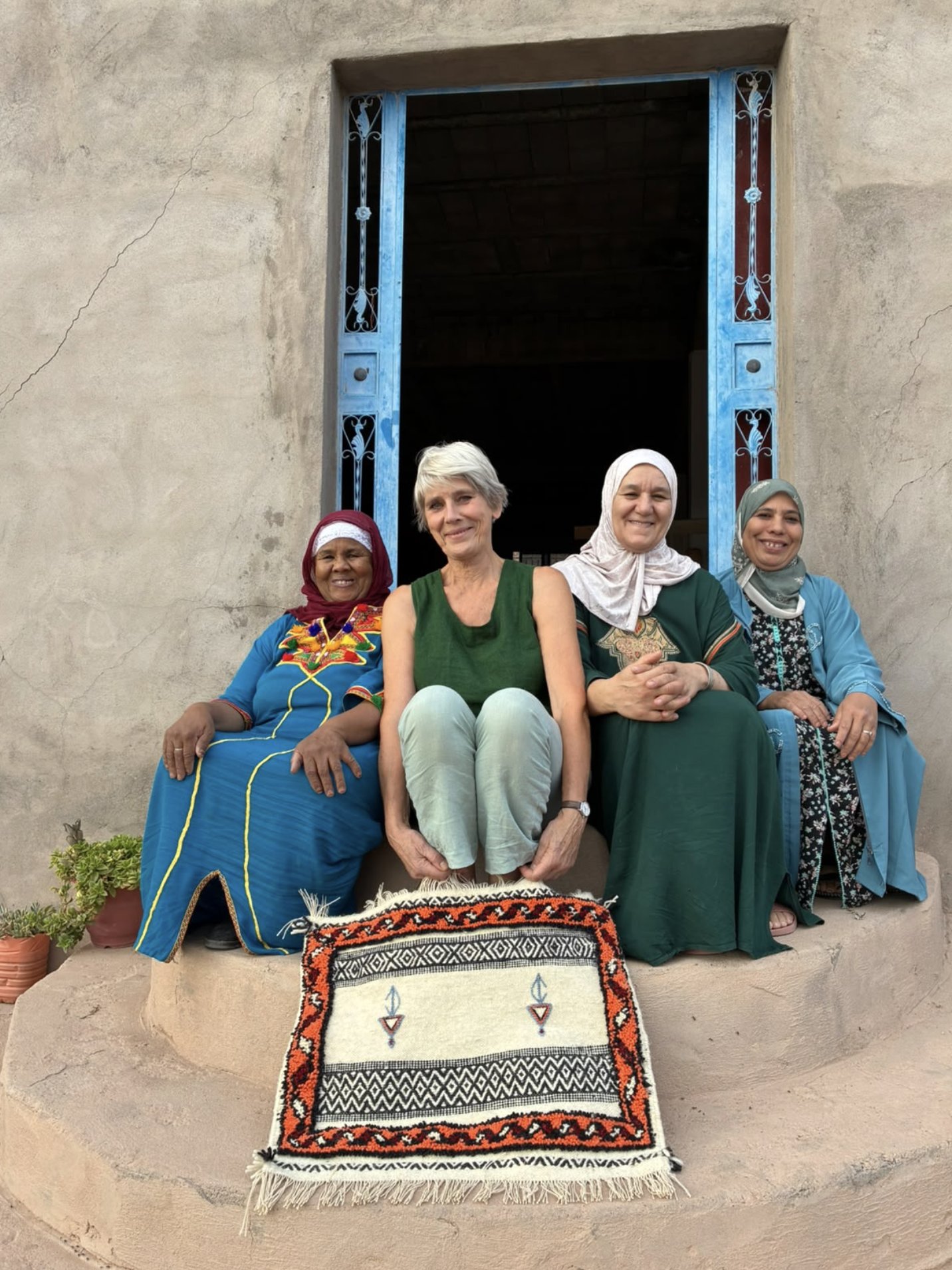
Mieke recently finished her residency with the women of Cooperative Afous GAfous in Lamdint, a village in the High Atlas between Marrakesh and Ouarzazate. It was the first official artisan residency hosted by an Anou artisan group, and it marks the launch of Afous GAfous's own residency program.
Mieke reached out to us with a specific request: she wanted to learn Glaoui weaving. That is not something we can always offer in Fes. The artisan team in Fes rotates, so beyond pile knotting and flatweave, the styles we can teach depend on who is there. Fatima, for example, is an expert in Glaoui weaving, but she is only in Fes every other month.
Glaoui shows why that matters. The style comes from the southeastern High Atlas, around Tazenakht and Ouarzazate, and takes its name from the Glaoua of Telouet. A single Glaoui rug combines three techniques: bands of flatweave alternate with bands of knotted pile and sections of chedwi, where black and white wool is wrapped around the warp to build diagonals and curves. It is one of the harder styles to learn, and you can only really learn it by sitting at the loom next to someone who has done it for decades.
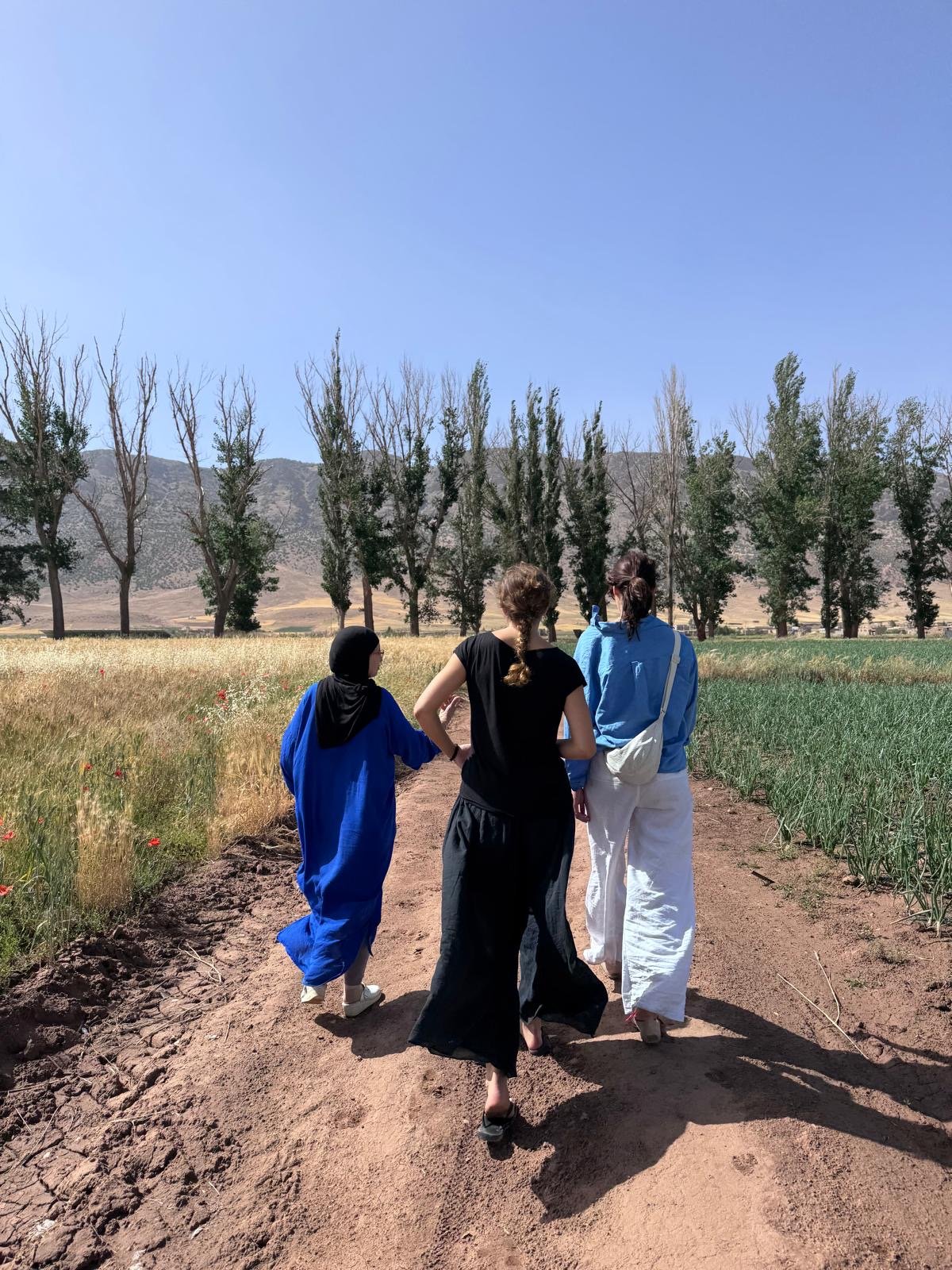
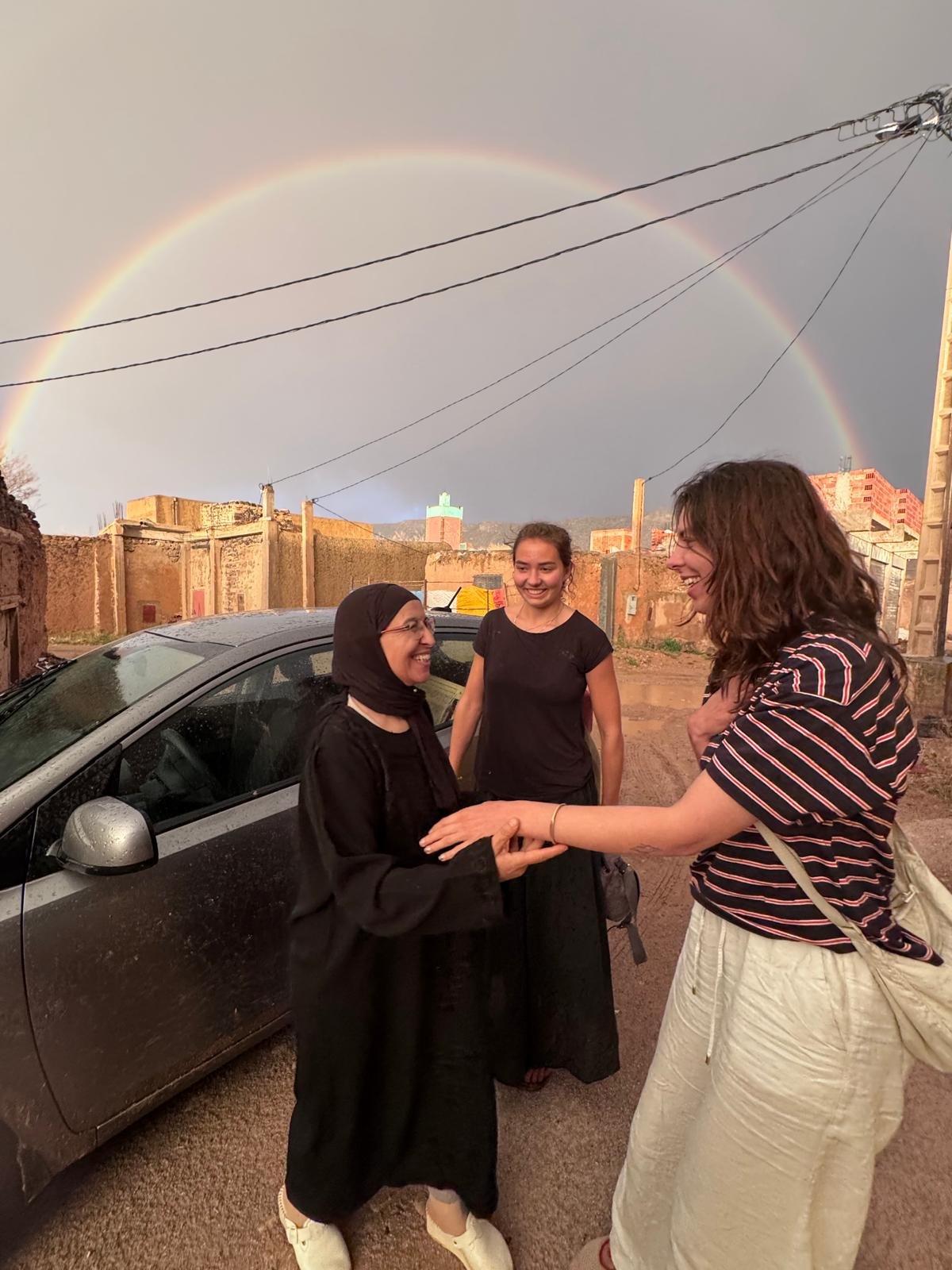
Glaoui is the tradition Afous GAfous is known for, so rather than wait for the right weaver to rotate through Fes, Mieke went to them. She lived with the family of one of the cooperative's members and spent each day weaving with the group, learning when to switch from one technique to the next, all the way to a finished rug.
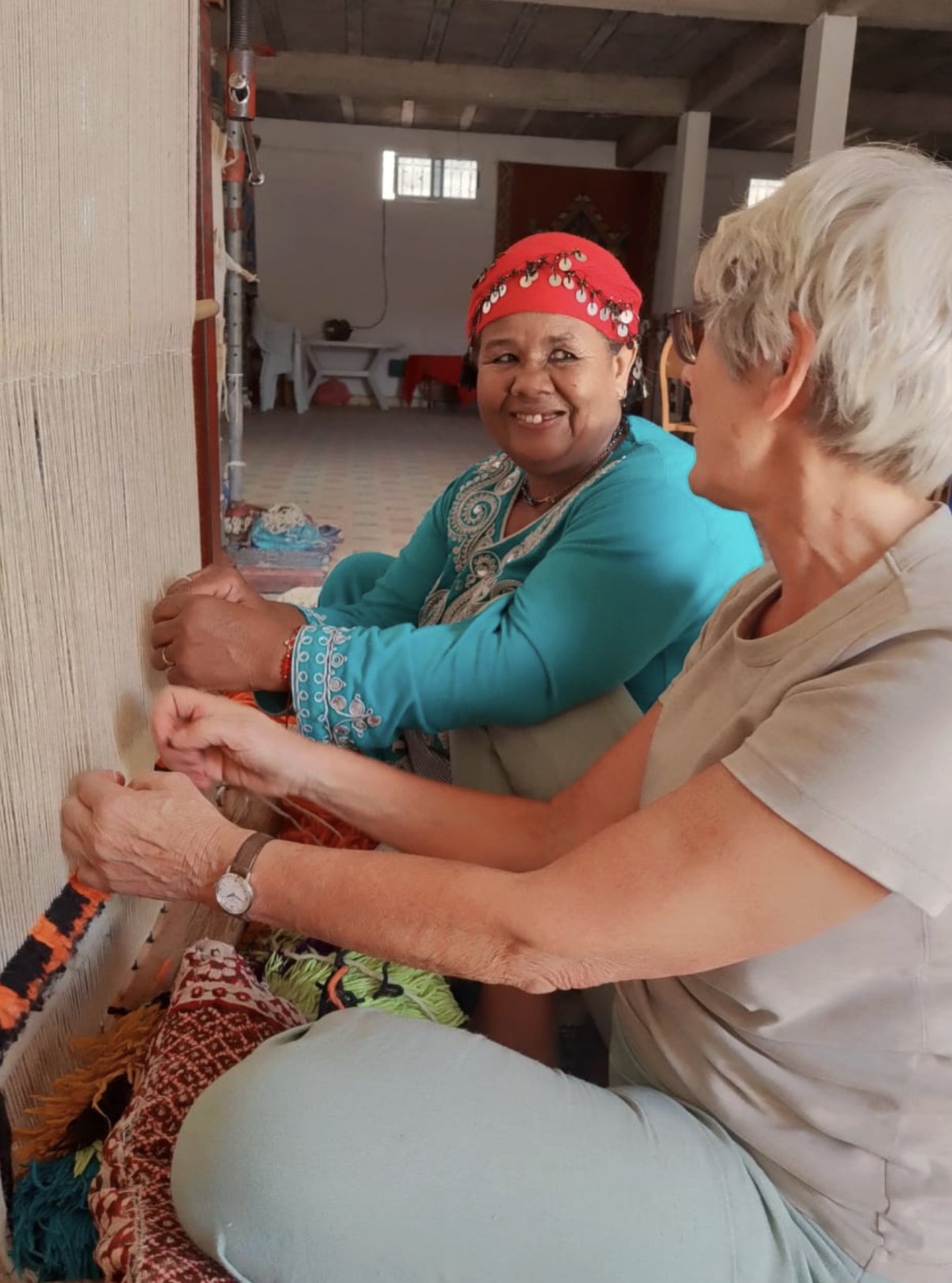
This is what artisan residencies make possible. Residents can go deeper into one group's craft and the styles of its region, and spend real time with the women who keep them alive. For the artisans, it turns their expertise into real income that adds to what they earn from selling their work, and it helps preserve the rich and varied tapestry of craft found across Morocco.
That matters because craft experiences in Morocco are growing fast: weaving workshops, artisan tours, design trips. There is room for all of it, and the new interest in craft is exciting. But look closely at many of these offerings and the artisans are rarely named. A tour can charge thousands of dollars and promise visits to "local artisan cooperatives" without ever saying who they are, what they make, or what they earn from the visit. We're all for tours and workshops. We just want them to lead to real, named artisans who are paid fairly for their time and knowledge. That takes organizing: helping groups understand the value of what they offer, set their own prices, and host guests well. That is the infrastructure Anou is building, and it is what will open this space up to artisans and visitors alike. We're also making it easier for tour partners to build on top of it, so they can create better experiences for everyone involved. Mieke's stay is one of the first steps, and we're glad she was part of it.
How Anou Residencies Work
Anou is a business-focused cooperative, but at heart it is one giant training program. Admin, customer service, quality control, government policy advocacy: almost everything this blog has covered over the years is built around training artisans. Hosting is no different. Artisans have run Anou workshops in Fes since 2023 and residencies since 2025. As they learn, they're encouraged to create experiences of their own back home. That is how workshops in Fes grew into visits to artisan groups, and now into artisan residencies. So when you come to Fes, you are stepping into a program that is training artisans for the future of their craft.
Residencies happen in three stages, each one a little further from the comforts of the city:
- Fes. The official Anou residency, hosted at the Anou foundouk in the medina.
- The Atlas Wool Supply Co. mill. Coming soon. A halfway step in the Aït Bouguemez valley. You spend the full day in the workshop with artisans, and always come back to top-tier accommodation and cooked meals.
- Artisan villages. Full immersion. You live with a family and weave with the group in their own space, as Mieke did with Afous GAfous.
Reviews work differently at each stage. In Fes, we run an internal review system for every residency and workshop. It is private and used for training, so artisans can learn from feedback as they go. Village residencies will have public, more detailed ratings. Each group sets its own price and can raise it as its ratings grow. Anou adds 20% on top, which supports the cooperative and helps us develop new groups. If a group receives a bad rating, it stays up until the group shows us the problem has been fixed.
Why Village Residencies Are Experimental
For now, village residencies are mostly open to people who have already completed a residency in Fes. Fes alumni can book directly using the email from their Fes application. Anyone else can apply through the group's page on the Artisan Residencies page, but the bar is high. We want to be sure every resident is ready for the experience, and what that means may vary as new groups come online.
Fes is a good introduction to the rhythms of Moroccan life: the pace of the day, meals shared with the people you work with, plans that shift without notice. In a village, you feel all of that more deeply. Arriving with a residency in Fes behind you makes it much easier to settle in and make the most of it.
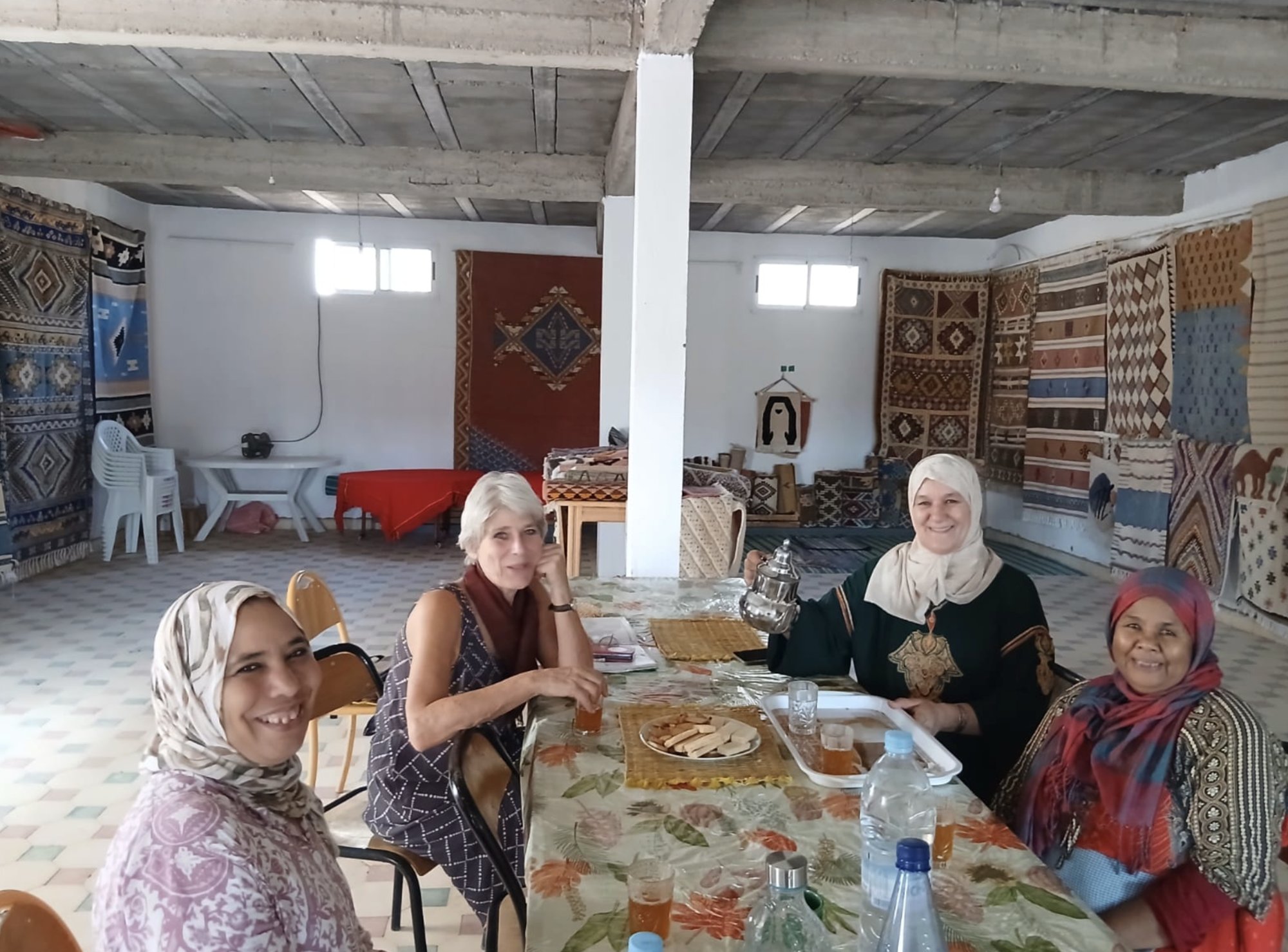
Village life is also simple in ways that take some getting used to. Bathrooms are basic, sometimes with squat toilets. Homes sit on working farmland, and the nearest hospital is back in the city. Travel insurance is required for every village stay.
Moving slowly also gives the artisans time. Moroccan villages are known for their hospitality, so the challenge isn't learning how to welcome guests. It's finding the right balance: keeping daily life and local traditions as they are, while meeting the handful of expectations that make the difference between a good stay and a great one.
Hospitality is sometimes even used as an argument against paying artisans at all. A tour operator once told us that visits should be free, and that encouraging artisans to charge for them went against Moroccan hospitality. Underneath that is an assumption we hear more often than you'd think: that artisans can't be expected to understand what a paying guest expects, so the only acceptable price is nothing. We see it differently. Hospitality is a gift, but an artisan's time, knowledge and home are worth paying for, just like any other creative's. The flip side is that charging asks something of the artisans too: to be intentional about creating an experience that truly reflects the best of their group, their skill and their community.
Starting slowly lets each group think through what they want their residency to look like, improve their space, and refine the experience with each guest before we open it more widely.
Association Tithrite, led by Anou artisan leader Kenza Oulghada, has been doing just that. Two Fes residents joined Anou board member Kirsten Rogers there for a trial residency earlier this summer, helping the group test what works before opening to more guests.
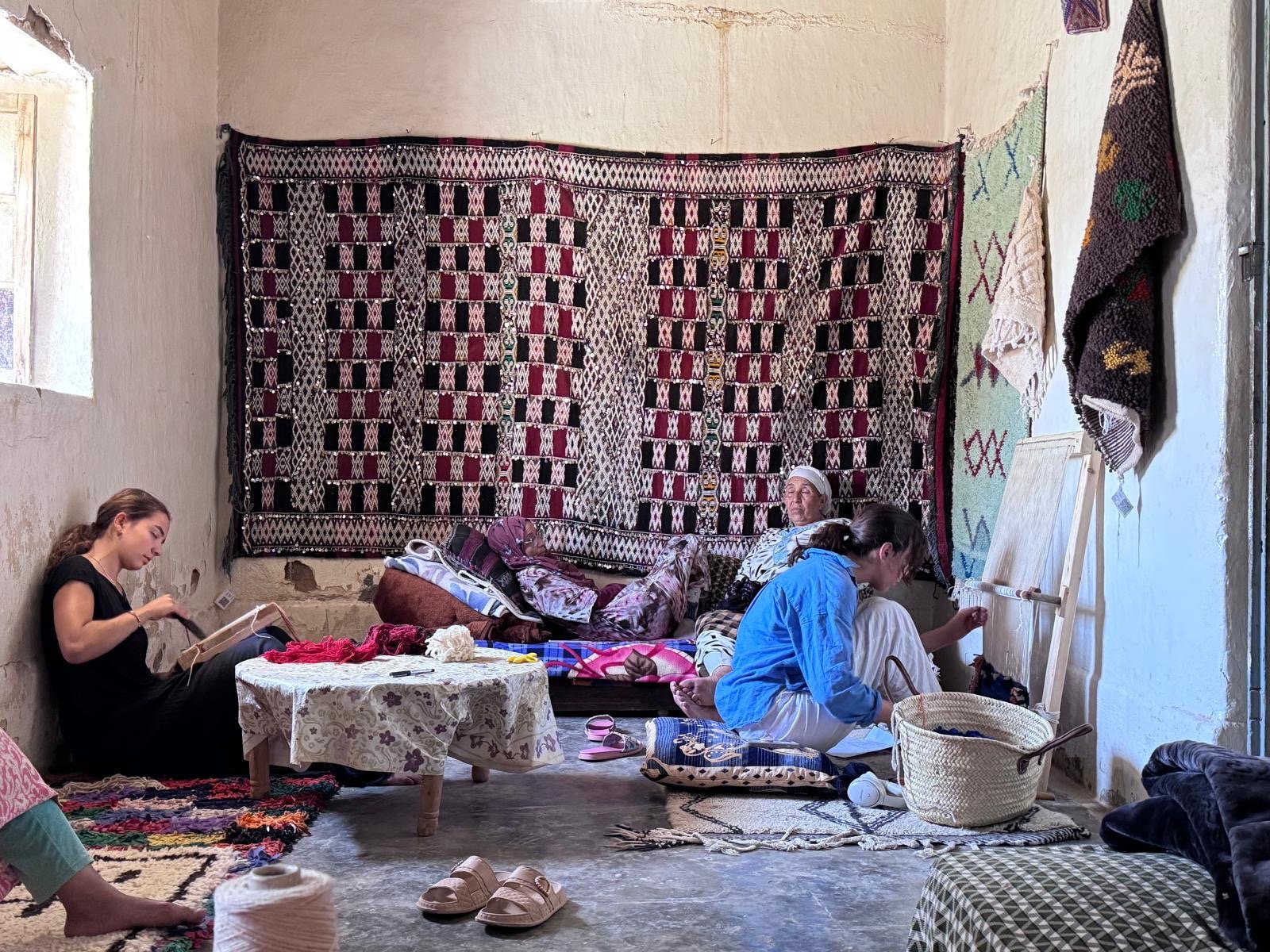
But we can't afford to go too slowly. Demand for craft experiences is growing now, and if artisan groups aren't ready to host, others will fill that space for them. That's why we'll soon be launching a grant fund through the Anou Foundation, where supporters can donate directly to help artisan groups renovate their workshops and living quarters. Every improvement means a better experience for residents, and gets us closer to opening village residencies to every resident and artisan group on Anou.
The Bigger Picture
In time, we want every artisan group on Anou to be able to host guests from around the world and share their craft at home.
This is part of what Anou has been building since the beginning. On Anou, artisans sell their work directly, without middlemen adding their markup. We want every other source of income the craft can bring, such as visits, workshops and residencies, to work the same way. That money should go to the cooperatives themselves, not to middlemen businesses dressed up as artisan ventures. As craft experiences grow, we expect bigger brands to move into this space too. We're moving fast, through the residency program and the Anou Foundation's new grant fund, so that when they do, the value of these experiences is already flowing to artisan communities rather than being captured by the people in between.
That matters more now than ever. The clunky rollout of CNSS, Morocco's national social security system, has severely harmed artisan cooperatives. Along with many other pressures, it means the traditional cooperative model has to adapt to a changing time, one in which craft around the world is under serious threat. Groups have to evolve, and that means thinking seriously about how they earn, from as many sources as they can. If they can't, the future of Moroccan craft will run through foreign brands in Sidi Ghanem, not the studios and villages where its heart lives. If Anou can thread this needle, we believe that in an increasingly difficult world, there will be few livelihoods better than being a Moroccan artisan.
Come Be Part of It
Want to help make this future a reality? Come join us for a residency. We want everyone to come.
Start with a residency in Fes and come back another time to stay with an artisan group, or do both in one trip. We're always happy for residents to combine their Fes residency with a short stay with a group. Right now Afous GAfous and Association Tithrite are both hosting. You can find them on the Artisan Residencies page. And if weaving really isn't your thing, remember that you can always browse the Anou marketplace and order a finished rug made by artisans across Morocco.
Whichever you choose, you won't just have a great experience. You'll be part of Anou's giant training program, and you'll play a real role in shaping the future of Anou and of craft in Morocco. We can't think of anything more exciting than that.
Run tours or workshops in Morocco? Anou already works with tour operators, and we'd love to work with more. Get in touch and we can help you build visits to real, named artisan groups into your itinerary, with artisans who set their own prices and host your guests themselves.
If you have a specific request like Mieke's, or any questions, reach out on Instagram or email us at hello@theanou.com.
Support This Work
Anou is owned and run by the artisans themselves — programs like the ones in these stories are funded entirely by marketplace sales and supporters like you. Your donation directly expands artisan-led work across Morocco.
Donate to Support Artisans