
The lozenge — the diamond on nearly every rug
“Today, it represents an attachment to the origin and hope for the future.”
Woven into these pieces
PAY WHAT YOU CAN · FROM $5
Over 100 symbols woven by Amazigh women — with the names and meanings they carry, told by the weavers themselves. Researched with Kenza Oulghada and the women weavers of the Anou Cooperative, designed by Dina Benbrahim, and published in Centered (Princeton Architectural Press, 2023).
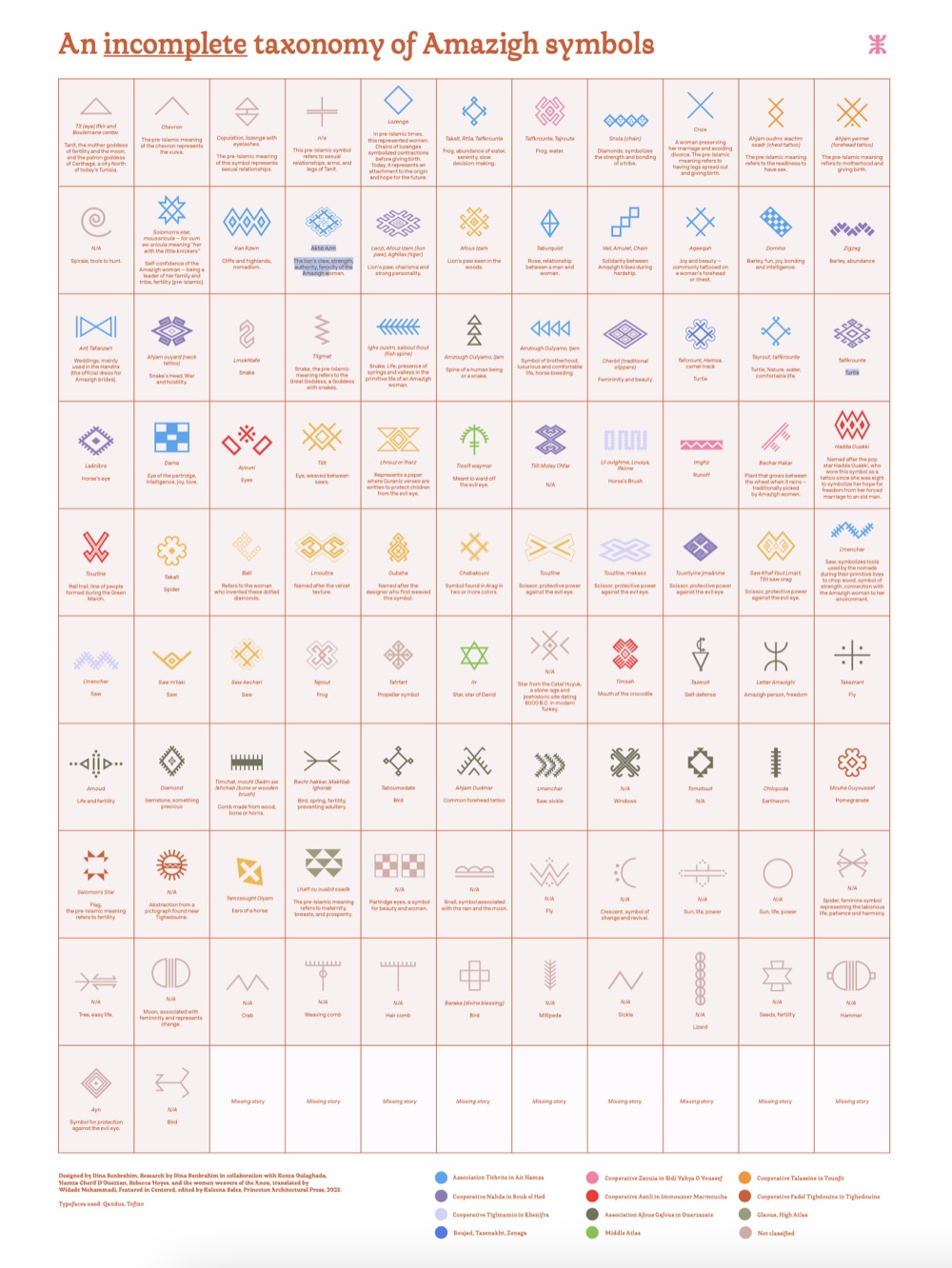
SLIDING SCALE · $5 TO $75
A contribution of any size gets you the same print-ready PDF. Every dollar goes to the Anou Foundation to continue craft research — documenting symbols, techniques, and stories with the artisans who hold them.
Secure checkout via Stripe · Paid to the Anou Foundation, a registered 501(c)(3)
Downloads fund craft research only. To support the foundation’s other programs — the Language Institute, prison craft training, equipment access — visit theanou.com/donate.
FROM THE TAXONOMY
Most guides to Amazigh symbols — often called Berber symbols — repeat the same secondhand lore. This is the only guide researched with the weavers themselves, across ten cooperatives and regions. Here is what four symbols you’ll find on rugs woven today actually mean, in the weavers’ own words.
“Today, it represents an attachment to the origin and hope for the future.”
Woven into these pieces
“Barley, abundance.”
Woven into these pieces
“A woman preserving her marriage and avoiding divorce.”
Woven into these pieces
“Diamonds — symbolizes the strength and bonding of a tribe.”
Woven into these pieces
All 101 symbols — with the cooperative each was recorded in — are in the PDF.
WHERE YOUR MONEY GOES
This taxonomy exists because weavers sat down and recorded what they know. As the fund grows, it will cover and subsidize new areas of research that support the growth of Anou and the wider artisan community in Morocco — always led with, and owned by, the artisans themselves.
Weaver-led documentation
Recording symbols, techniques, and oral histories with the artisans who hold them — in their own words, on their own terms.
New research areas
As the fund grows it will cover and subsidize research supporting the growth of Anou and Morocco’s wider artisan community.
Open publishing
Findings published pay-what-you-can, like this taxonomy — a minor contribution puts them within anyone’s reach.
THE PEOPLE BEHIND IT
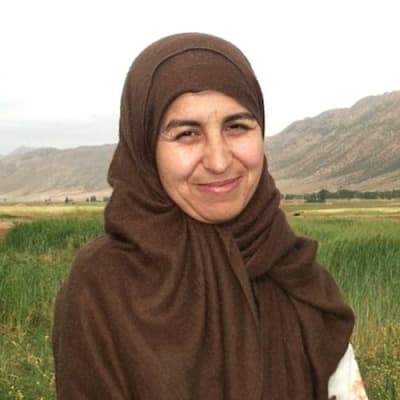
Kenza Oulghada
Weaver · President, Association Tithrite · Anou artisan leader
Led the gathering of the meanings, sitting with weavers across the community so they could be recorded in their own words.

Dina Benbrahim
Designer, educator & writer
Designed the taxonomy and published it as Woven in Oral History in Centered, in support of the weavers’ record.

Rebecca Hoyes
Textile designer & colourist, Central Saint Martins
A decade alongside Anou’s artisans on color and design, and the residency program that brings designers to Fez.
With the women weavers of the Anou community · Edited by Kaleena Sales · Princeton Architectural Press, 2023


